
Turf Advice from Penn State Extension faculty provides you with all the information you need to manage your site. From establishing your home lawn to managing various pests on your golf course, Turf Advice from the faculty at Penn State has the answers to your questions.
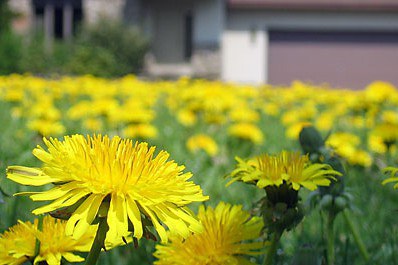
Home lawns represent 70 percent of Pennsylvania’s 2,000,000 acres of turfgrass. Lawns increase the property value of homes and stabilize soils (thereby preventing soil erosion in the residential environment). This page contains publications on lawn establishment, maintenance, pest management, and other problems.
According to the most recent Pennsylvania turfgrass survey, 2 million acres of turfgrass are maintained in the Commonwealth and approximately 1.4 billion dollars are spent annually on turfgrass establishment and maintenance. To help meet the demands of this large and growing industry, the turfgrass extension program provides services for individuals who make their living managing lawns, golf courses, athletic fields, parks, and grounds. The Professional Turfgrass Management page provides information and links of interest to lawn care professionals; landscape contractors; golf course superintendents; athletic field managers; grounds maintenance supervisors; and representatives of the turfgrass seed, chemical, and equipment industries.
This site is designed to have an interactive approach to facilitate your needs. The more you know about the plant in question, the faster you can achieve your results. This site provides users with identification and control options for numerous but not all plants relevant to the Turfgrass industry of the Mid-Atlantic region.
Tests of commercially-available turfgrass cultivars and experimental selections are conducted annually at Penn State to provide turfgrass managers, seed industry representatives, county agents, and other interested persons with information about turfgrass characteristics and performance. This page contains reports on the performance of Kentucky bluegrass, fine fescues, and bentgrass cultivars and experimental selections. Entries in these tests were supplied by National Turfgrass Evaluation Program (NTEP). Keep in mind that the results of these tests reflect cultivar performance for the management regime imposed at this site and environmental conditions in central Pennsylvania.
Home to one of the largest research programs exclusively focused on the management of athletic fields, Penn State has all of information you need. This includes information for managing both natural and artificial turf fields.
Penn State is recognized as a leader in the field of turfgrass science throughout the world. From the release of 'Penncross' creeping bentgrass to the 'A' and 'G' series, we have are at the forefront of research and development for golf courses.
Penn State offers a variety of turfgrass related services including soil and water testing, disease identification, and others. This section provides you with information about each of these services.
